Solar panels in New York: cost, payback and the rules that matter
New York homes pay 29.4¢ per kWh for electricity, the 5th highest of 51, up 13.0% in a year. A typical home needs 14 panels. With no federal tax credit they pay for themselves in about 8.8 yrs.
Four facts that decide solar in New York
1. The sun. One kilowatt of panels makes about 1,214 kWh a year in the median New York city, from 1,155 in Syracuse to 1,326 in Hempstead.
2. The price of electricity. Every kWh your panels make is worth what you would otherwise pay: 29.4¢ in New York today.
3. What your utility pays for exports. Illustrative: retail net metering (Phase One) with a Customer Benefit Contribution of about $1.41/kW-month (Con Edison) or $0.97 (National Grid). Based on summaries of Con Edison and National Grid rules (confidence: medium); not yet checked against the tariff itself. Other utilities, co-ops and municipal utilities differ; check yours. Last reviewed September 2026. Source.
4. Incentives. The 30% federal homeowner credit (§25D) ended for systems installed after December 31, 2025. New York homeowners can still claim the 25% state solar equipment tax credit (up to $5,000), are exempt from state sales tax, and get a 15-year property-tax exemption unless their town opted out. NYC homeowners can also take a 4-year property-tax abatement of 7.5% of installation cost per year. NY-Sun's market-rate residential rebate has ended in Con Edison and Long Island territory; low- and moderate-income households can still get $0.80/W ($0.40/W on Long Island), and NYSERDA pays per-kWh battery incentives. Every program, with sources.
New York's homes
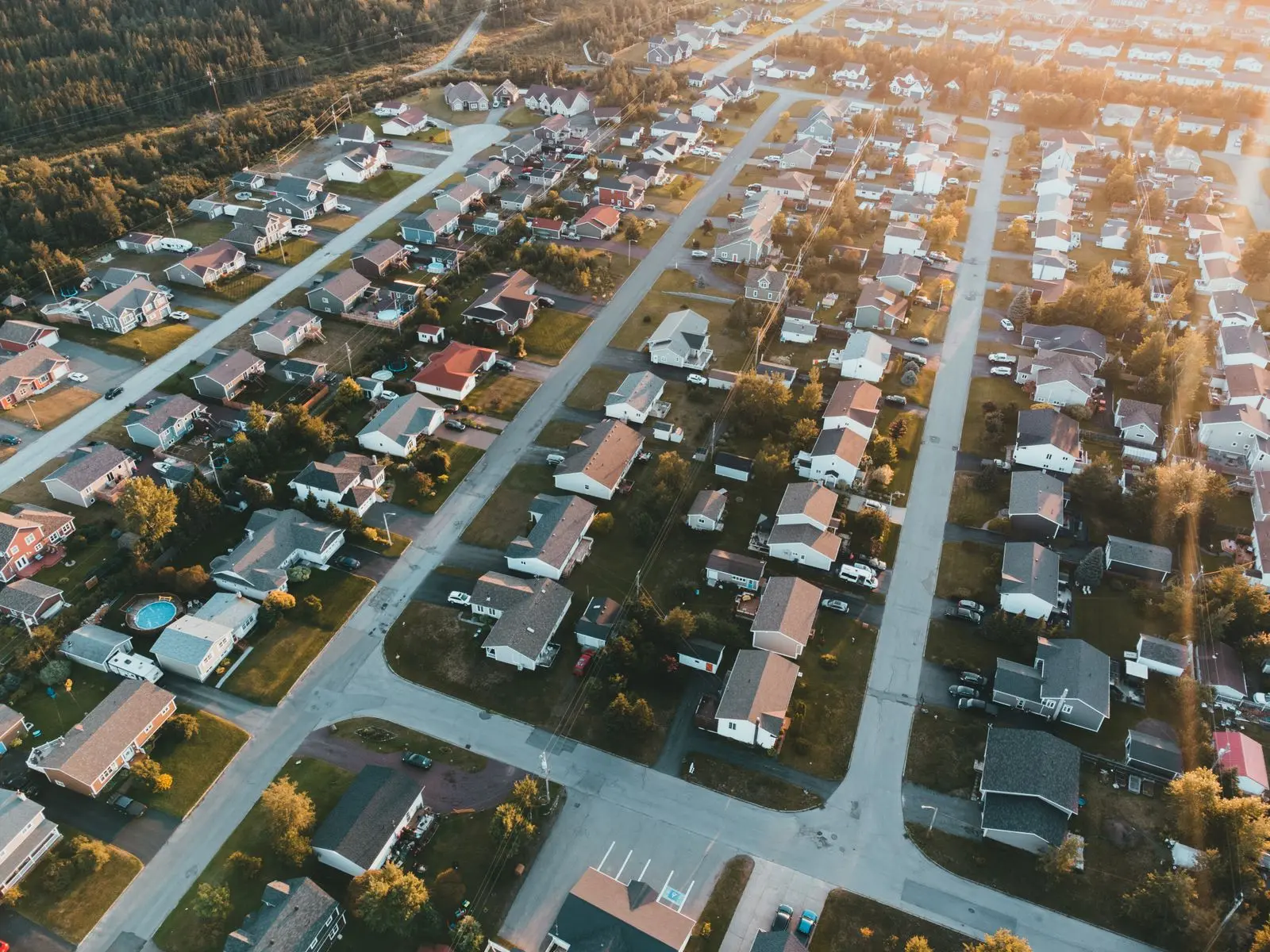
7,722,646 households; 54.3% own their home. 3,220,929 owner-occupied single-family houses: the main market for rooftop solar. The median home was built in 1959; 15.4% heat with electricity.
ACS 2020–2024 5-year estimates, U.S. Census Bureau.
Plan a specific New York home
New York solar incentives in 2026
What ended: Federal 30% Residential Clean Energy Credit (§25D), for homeowner-owned systems installed after December 31, 2025 (IRS). Also ended: NY-Sun market-rate residential MW Block incentive, Con Edison region (closed May 29, 2025) and Long Island (fully allocated February 2019; only Affordable Solar remains) (2025).
What remains: New York homeowners can still claim the 25% state solar equipment tax credit (up to $5,000), are exempt from state sales tax, and get a 15-year property-tax exemption unless their town opted out. NYC homeowners can also take a 4-year property-tax abatement of 7.5% of installation cost per year. NY-Sun's market-rate residential rebate has ended in Con Edison and Long Island territory; low- and moderate-income households can still get $0.80/W ($0.40/W on Long Island), and NYSERDA pays per-kWh battery incentives.
Selling solar back: Residential solar that interconnected on or after January 1, 2022 is still net metered but pays a monthly Customer Benefit Contribution per kW-DC. 2026 net-metered residential rates range from $0.97 (National Grid) to $1.67 (Central Hudson) per kW per month; Con Edison is $1.29. Source.
Only fixed upfront rebates and state tax credits for systems you own go into the payback figures on this page and the city pages. Checked against primary sources on 2026-10-05.
Statewide
- Solar Energy System Equipment Credit (Form IT-255)State tax creditcounted in our payback
25% of qualified costs, up to $5,000. Nonrefundable; unused credit carries forward up to 5 years.
From the source: “The credit is equal to 25% of your qualified solar energy system equipment expenditures and is limited to $5,000.”
System must be installed and used at your principal residence in New York State. Purchases, leases, and 10+ year PPAs all qualify.
New York State Department of Taxation and Finance · Source, checked Oct 5, 2026
- NYSERDA Residential Energy Storage Incentive (MWh Block)Battery program
Block 1: $250 per kWh in Con Edison territory and $200 per kWh in the Rest of State, on up to 25 kWh (so up to $6,250 or $5,000)
From the source: “Table 3-1. Con Edison Residential MWh Block Capacity Allocations and Incentive Levels Block Capacity Incentive Rate Funding MW MWh $/kWh $ Block 1 10 25 $250 $6,250,000”
New or existing homes outside Long Island. Rest of State covers O&R, Central Hudson, National Grid, NYSEG and RG&E. Applied for by a participating contractor. The system must interconnect after NYSERDA receives the application. Utility demand-response enrollment (e.g., Con Edison BYOB) may become a requirement.
NYSERDA · Source, checked Oct 5, 2026
- NY-Sun Affordable Solar Residential IncentiveIncome-qualified
$0.80/W ($800/kW) total in the Upstate and Con Edison regions; $0.40/W on Long Island
From the source: “Projects eligible for the Affordable Solar Residential Incentive will receive a total incentive of $0.80/W of nameplate capacity in Upstate and Con Edison regions, and $0.40/W in Long Island region.”
Owner-occupied primary residence with household income below 80% of Area Median Income or 80% of State Median Income, whichever is higher, verified through NYSERDA's Income Eligibility Application. Applied for by a participating contractor.
NYSERDA (NY-Sun) · Source, checked Oct 5, 2026
- NYSERDA Residential Inclusive Storage Incentive (ISI)Income-qualified
Block 1: $450 per kWh of storage, on up to 25 kWh
From the source: “NYSERDA will has allocated an initial capacity of 10 MW/25 MWh at an incentive rate of $450/kWh to the first block of Residential ISI.”
Home is in a Disadvantaged Community census tract, OR is an owner-occupied primary residence with income below 80% AMI/SMI (or enrolled in HEAP, SNAP, etc.), OR is a 1–4 unit affordable housing property. Long Island participation depends on LIPA.
NYSERDA · Source, checked Oct 5, 2026
- Real Property Tax Law §487 exemption for solar energy systemsProperty tax
The increase in assessed value from the system is exempt for 15 years, unless your county, city, town, village or school district opted out
From the source: “is exempt from taxation for a period of 15 years to the extent of any increase in assessed value due to the system.”
Systems built before January 1, 2030. Local governments may opt out (a list of opt-outs is published), except the school districts of New York City, Buffalo, Rochester, Syracuse and Yonkers. Localities that have not opted out may require a PILOT contract.
Local assessors (NYS Department of Taxation and Finance guidance) · Source, checked Oct 5, 2026
- Sales tax exemption for residential solar energy systems equipmentSales tax
Exempt from the 4% state sales tax and the 3/8% MCTD tax. Local sales tax exemption depends on the county or city (see Publication 718-S).
From the source: “The sale and installation of residential solar energy systems equipment is exempt from: the 4% New York State sales and use tax, and”
Residential solar equipment and its installation. Homeowners give the seller Form ST-121.
New York State Department of Taxation and Finance · Source, checked Oct 5, 2026
From utilities and cities
- Long Island Single-Family Residential Storage IncentiveBattery program
Block 2: $250 per kWh of storage. About $385,000 of the $5.7M block remained at last check.
From the source: “Long Island Single-Family Residential Incentives - Block 2 Allocated Budget: $5,700,000 Committed Budget: $5,314,865 Available Budget: $385,135 Current Incentive : $250/kWh”
PSEG Long Island customers. Battery must be paired with new or existing solar and enrolled in PSEG Long Island's Dynamic Load Management program.
NYSERDA (RGGI-funded) · PSEG Long Island customers · Source, checked Oct 5, 2026
- PSEG Long Island Battery Storage RewardsBattery program
Annual payment set by your aggregator; PSEG Long Island publishes no rate
From the source: “The payment you receive is determined by your aggregator and may depend on how well your battery system performed during each event.”
PSEG Long Island solar-plus-battery customers enrolled through an aggregator. Events run May 1–September 30, fewer than 10 per summer, up to 4 hours each.
PSEG Long Island (via third-party aggregators) · PSEG Long Island customers · Source, checked Oct 5, 2026
- Con Edison Bring Your Own Battery (BYOB)Battery program
$100 per kW of average seasonal performance, paid once after each May–September season (2026 rate)
From the source: “2026 Capability Period Incentive Rate ($/kW of seasonal performance): $100”
Con Edison customers with a qualifying, internet-connected battery enrolled through an approved service provider.
Con Edison · Con Edison customers · Source, checked Oct 5, 2026
- NYC Solar Electric Generating System (SEGS) Tax AbatementProperty tax
7.5% of installation cost per year for 4 years (systems placed in service 1/1/2024–1/1/2035), capped each year at the lower of your property tax or $62,500
From the source: “Your benefit will be either an amount equal to the percentage of your installation cost, an amount equal to your annual property taxes, or $62,500—whichever is lowest.”
Tax class 1, 2 and 4 properties in New York City. Not available to properties receiving ICAP, 421-a, 421-b, 421-g or paying PILOTs. DOB approves the application.
NYC Department of Finance / Department of Buildings · Source, checked Oct 5, 2026
Solar in every New York city with 50,000+ people
| City | Main utility | Price ¢/kWh | kWh per kW | Typical kW | Likely payback | Payback (NM) | Payback (NB) |
|---|---|---|---|---|---|---|---|
| New York | Con Edison | 42.9 | 1,313 | 5.5 | 4.1 yrs | 4.1 yrs | 6.9 yrs |
| Buffalo | National Grid | 20.7 | 1,168 | 6.3 | 9.5 yrs | 9.5 yrs | 16.2 yrs |
| Yonkers | Con Edison | 42.9 | 1,298 | 5.5 | 4.2 yrs | 4.2 yrs | 7.0 yrs |
| Rochester | RG&E | 22.6 | 1,165 | 6.3 | 8.8 yrs | 8.8 yrs | 14.9 yrs |
| Syracuse | National Grid | 20.7 | 1,155 | 6.3 | 9.6 yrs | 9.6 yrs | 16.3 yrs |
| Albany | National Grid | 20.7 | 1,214 | 5.9 | 9.2 yrs | 9.2 yrs | 15.5 yrs |
| New Rochelle | Con Edison | 42.9 | 1,304 | 5.5 | 4.1 yrs | 4.1 yrs | 7.0 yrs |
| Mount Vernon | Con Edison | 42.9 | 1,302 | 5.5 | 4.1 yrs | 4.1 yrs | 7.0 yrs |
| Schenectady | National Grid | 20.7 | 1,209 | 5.9 | 9.3 yrs | 9.3 yrs | 15.5 yrs |
| Utica | National Grid | 20.7 | 1,170 | 6.3 | 9.5 yrs | 9.5 yrs | 16.2 yrs |
| White Plains | Con Edison | 42.9 | 1,298 | 5.5 | 4.2 yrs | 4.2 yrs | 7.0 yrs |
| Hempstead | PSEG Long Island | 29.6 | 1,326 | 5.5 | 5.9 yrs | 5.9 yrs | 10.0 yrs |
| Troy | National Grid | 20.7 | 1,214 | 5.9 | 9.2 yrs | 9.2 yrs | 15.5 yrs |
Main utility = the one serving most of the city (EIA-861 ZIP data and federal territory maps); price is its 2024 residential average adjusted to July 2026. Likely payback uses that utility's export rule where we have read it, otherwise the New York assumption. NM = exports credited at retail (net metering); NB = exports at ~30% of retail (net billing). Systems sized to the New York average home. $3.00/W, cash, 25 years, incentives we can count included.
Rule changes that affect New York
All changes and deadlines →- Federal: In-service deadline for the lease/PPA solar credit · Tax credits
- Federal: National data: solar prices fell to a median $3.60 per watt · Prices
- Federal: Construction-start deadline passed for the lease/PPA credit · Tax credits
- Federal: The 30% homeowner solar tax credit is gone · Tax credits
Questions about solar in New York
How much do solar panels cost in New York?
A 5.9 kW system, the size the average New York home needs, costs about $14,750 to $22,125 before incentives in 2026. NY solar energy system equipment credit: 25% up to $5,000 (5-year carryforward).
Is solar worth it in New York?
In the median New York city, solar pays for itself in about 8.8 yrs under our illustrative statewide export-credit assumption (retail net metering (phase one) with a customer benefit contribution of about $1.41/kw-month (con edison) or $0.97 (national grid)). With full retail net metering it would be about 8.8 yrs; with exports at about 30% of retail, 14.9 yrs. Your utility's tariff decides where you land.
Is there a solar tax credit in New York?
NY solar energy system equipment credit: 25% up to $5,000 (5-year carryforward). The 30% federal credit ended for homeowner systems installed after December 31, 2025.
Are there solar rebates in New York?
New York homeowners can still claim the 25% state solar equipment tax credit (up to $5,000), are exempt from state sales tax, and get a 15-year property-tax exemption unless their town opted out. NYC homeowners can also take a 4-year property-tax abatement of 7.5% of installation cost per year. NY-Sun's market-rate residential rebate has ended in Con Edison and Long Island territory; low- and moderate-income households can still get $0.80/W ($0.40/W on Long Island), and NYSERDA pays per-kWh battery incentives. Some utilities and cities add their own: Long Island Single-Family Residential Storage Incentive; PSEG Long Island Battery Storage Rewards; Con Edison Bring Your Own Battery (BYOB). Checked 2026-10-05 against primary sources.
Which utility do I have in New York?
It depends on the city. In the cities we cover, the main utilities are National Grid, Con Edison, RG&E, PSEG Long Island. Your utility sets your price and what exported solar earns, so check the name on your bill and open your city's page.
How many solar panels does a New York home need?
About 14 panels of 420 watts for the state-average 571 kWh a month. Sunnier cities need fewer: Hempstead gets 1,326 kWh per kW a year, Syracuse 1,155.