Solar panels in Merced, California: cost, payback and what they make
Power is expensive here: Merced Irrigation District customers pay about 25.2¢ per kWh against a U.S. average of 18.2¢, so every kWh panels make is worth more than in most of the country.
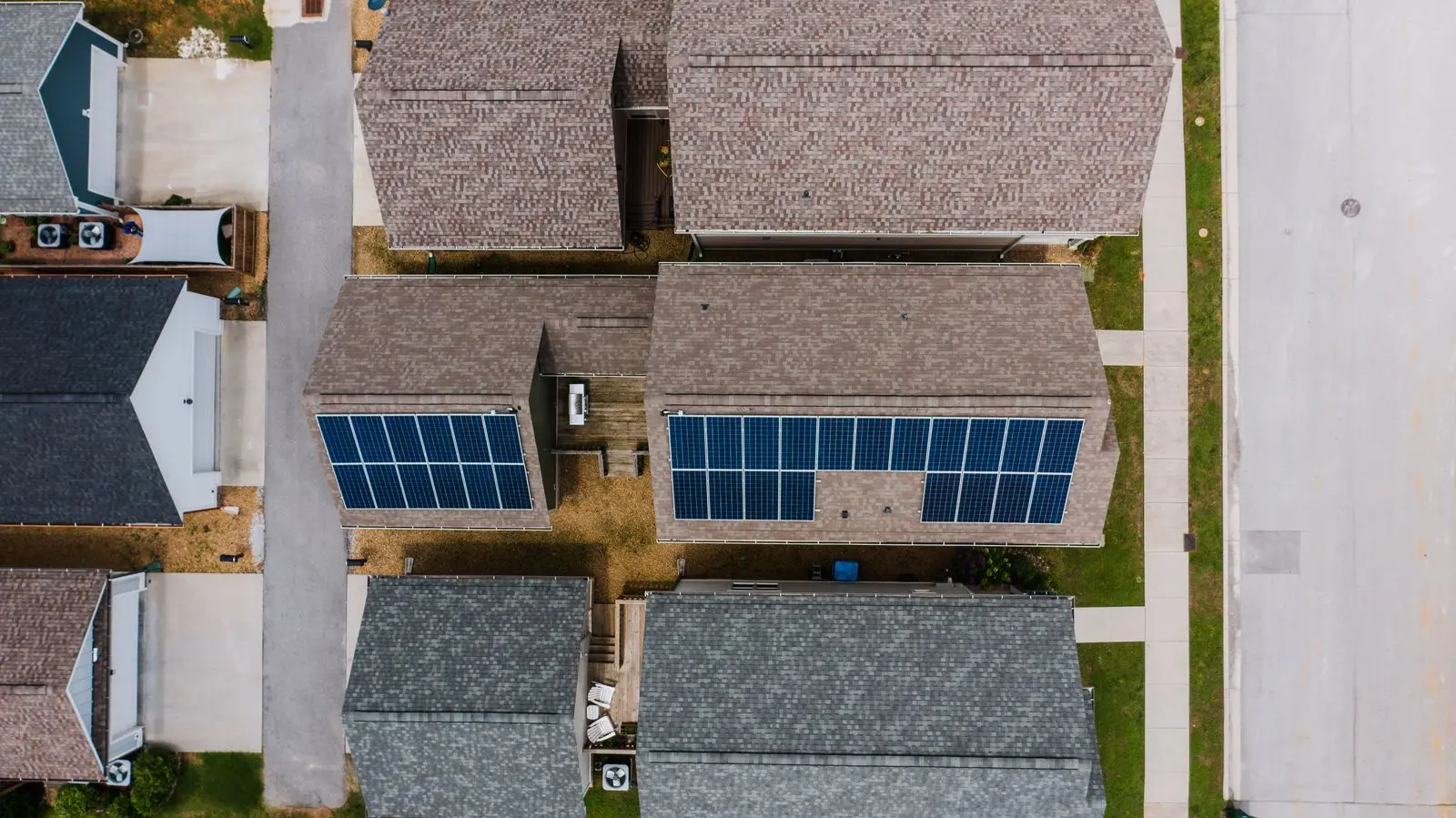
A typical home here needs 9 panels (3.8 kW) to cover the California average of 503 kWh a month; at national installed prices that is $9.5k–$14k before incentives, paying back in about 12 years under our illustrative export assumption.
Here payback depends more on Merced Irrigation District’s export rules than on the sun: about 7 years if exported power earns full retail credit, about 12 years if it earns about 30% of retail.
The short answer for Merced
Can work, but price quotes carefully.
What could change this for your home
- What Merced Irrigation District pays for exports. We haven’t verified it, so payback could land anywhere in the range above.
- Your usage and rate plan. We assumed the California average of 503 kWh a month at 25.2¢/kWh.
- Your roof and your quote. Shade, direction and a price above $3.00/W all lengthen payback.
Next steps
- Run your own address for your roof, your bill and your utility.
- Get two or three quotes, then check a quote against these numbers.
- Ask the installer the questions on our checklist before you sign.
See panels on your own Merced roof
Type your address. You get your roof from above, a preliminary panel layout (not a site survey), a month-by-month forecast and a battery test, priced at Merced Irrigation District’s rates. No phone number.
What solar costs in Merced
At $3.00 a watt, the median price cash buyers pay nationally, a 3.8 kW system costs about $11,400. Quotes in Merced will usually fall between $9,500 and $14,250. These are national prices applied to the system a typical Merced home needs, not local quotes; complex roofs, main-panel upgrades and financing push prices up.
The 30% federal tax credit no longer applies to systems homeowners buy. We found no state or utility rebate we can count here; see what else exists.
Cash purchase at 25.2¢/kWh (Merced Irrigation District average), prices rising 2.5% a year, panels losing 0.5% a year, $25/kW a year for upkeep. No federal credit for homeowner-owned systems.
Your utility and what it pays for solar
Most of Merced is served by Merced Irrigation District, a public power district. Its homes paid an average of 25.2¢ per kWh, below the California average of 33.3¢. Parts of the city and its edges are served by PG&E; check the name on your bill.
The number that decides whether solar pays in Merced is what your utility pays for the power you send back. Our estimate uses:
On that basis payback is about 11.9 yrs. For comparison, full would give about 7.1 yrs, and exports at about 30% of retail about 11.9 yrs.
Questions to ask Merced Irrigation District
- What do you pay for each kWh of solar I export, and does it change by time of day?
- Do unused credits roll over, and what happens to them at the end of the year?
- Are there monthly fees, minimum bills or a required rate plan for solar customers?
- Is there a cap or waitlist for new solar connections?
How we match cities to utilities: EIA-861 service data by ZIP code and federal service-territory maps. Method
Solar incentives in Merced
Programs open to Merced homeowners and Merced Irrigation District customers, from primary sources. Only fixed upfront rebates and state tax credits for systems you own go into our payback; the rest are listed so you can ask about them. Federal 30% Residential Clean Energy Credit (§25D) ended for homeowner-owned systems installed after December 31, 2025 (IRS).
- Demand Side Grid Support (DSGS) Option 3 – Market-Aware Storage VPPBattery program
Performance payments are made to VPP aggregators (up to $42.7M statewide for the 2026 season). The homeowner's share depends on the aggregator.
From the source: “Except for VPP aggregators of bi-directional EVSEs, participation in the 2026 season is limited to storage VPP aggregators that participated in October 2025.”
Join through a storage VPP aggregator that took part in October 2025 (bidirectional-EV aggregators are exempt from this limit). The battery must be able to discharge at least 1 kW for 2 hours. Customers cannot also be paid for the same performance by ELRP or other utility demand-response programs.
California Energy Commission · Source, checked Oct 5, 2026
- Self-Generation Incentive Program – Residential Solar and Storage Equity (AB 209), IOU / SoCalGas-assigned / LADWP territoriesIncome-qualifiedwaitlist
$3.10/W for solar plus $1.10/Wh ($1,100/kWh) for storage. Single-family storage is capped at 30 kWh. All of these territories are waitlisted.
From the source: “Example: 13.2 kWh x $1.10/Wh = $14,520 allowable storage cost, 5 kW x $3.10/W = $15,500 allowable solar cost, $30,020 = maximum SGIP Incentive.”
INCOME-QUALIFIED: single-family household income at or below 80% of area median income, or prior income verification through SASH, DAC-SASH, CARE, FERA or ESA. This budget covers PG&E and SCE non-POU customers, SDG&E customers (through CSE), customers of POUs assigned to SoCalGas (including Glendale, Burbank, Pasadena, Anaheim and Riverside), and LADWP customers.
SGIP program administrators (PG&E, SCE, CSE for SDG&E, SoCalGas, LADWP) · PG&E, SCE, SDG&E, SoCalGas, LADWP customers · Source, checked Oct 5, 2026
- Active Solar Energy System New Construction Exclusion (R&T Code §73)Property tax
The added value of a qualifying active solar system is not reassessed. This is a new-construction exclusion, not an exemption.
From the source: “Effective September 18, 2022, the sunset date for the active solar energy system new construction exclusion was extended through 2025-26 fiscal year. The statute is now scheduled to sunset on January 1, 2027.”
Active solar energy systems that qualify before January 1, 2027. Systems excluded before then stay excluded until the property changes ownership.
California State Board of Equalization / county assessors · Source, checked Oct 5, 2026
Every California incentive, including ones that have ended →
Every way to pay for a 3.8 kW system in Merced
Change any number →| Way to pay | Day one | Monthly payment | Monthly net, year 1 | Ahead after 25 years |
|---|---|---|---|---|
| Pay cash Full price on install day | $11,400 | $0 | +$70 | $16k |
| Credit-union loan 8% APR, 20 years, no dealer fee | $0 | $95 | −$25 | $4,800 |
| “1.99%” solar loan 1.99% APR, 25 years, 25% dealer fee | $0 | $60 | +$10 | $9,600 |
| Lease $65/mo, +2.9%/yr | $0 | $65 | +$13 | $2,000 |
| Power purchase (PPA) 12.6¢/kWh, +2.9%/yr | $0 | $67 | +$12 | $3,100 |
Under the export-credit assumption above (net billing (illustrative)), at 25.2¢/kWh rising 2.5% a year. The “1.99%” loan’s $2,850 dealer fee is included in its payments. Lease and PPA prices are typical offers, not quotes.
How much sunshine Merced gets
kWh per kW, 25° southJul is the best month for solar in Merced, and Dec the weakest: a Dec day makes 49% of a Jul day. A 6 kW system would make about 509 kWh in Dec and 1,046 kWh in Jul.
On June 21 the sun rises at 5:41 am and sets at 8:25 pm, 14 hours 44 minutes of daylight. On December 21 it is up from 7:12 am to 4:47 pm, just 9 hours 35 minutes.
Peak sun hours in Merced, month by month
| Month | Flat ground | Panels at 33° | kWh per kW |
|---|---|---|---|
| Jan | 2.4 | 3.9 | 89 |
| Feb | 3.5 | 5.1 | 107 |
| Mar | 4.9 | 6.1 | 144 |
| Apr | 6.3 | 6.8 | 157 |
| May | 7.6 | 7.2 | 173 |
| Jun | 8.4 | 7.4 | 173 |
| Jul | 8.2 | 7.4 | 174 |
| Aug | 7.4 | 7.5 | 172 |
| Sep | 6.1 | 7.3 | 157 |
| Oct | 4.5 | 6.5 | 142 |
| Nov | 3.0 | 4.9 | 106 |
| Dec | 2.2 | 3.7 | 85 |
| Year | 5.4 | 6.2 | 1,679 |
A peak sun hour is one hour of sunlight at 1,000 W per m². Why sites disagree.
The best angle and direction for panels in Merced
| Roof faces (6/12 pitch) | Output vs south | kWh per kW |
|---|---|---|
| South | 100% | 1,679 |
| Southeast | 96% | 1,612 |
| Southwest | 95% | 1,595 |
| East | 84% | 1,410 |
| West | 83% | 1,394 |
| North | 61% | 1,024 |
Face panels south and tilt them 33° for the most energy over a year. East and west roofs keep about 84% of that. A north-facing roof keeps 61%, which is rarely worth the money. Try other angles.
Where the sun goes over Merced
The noon sun is lower in winter, which is why the best winter tilt (61°) is steeper than the best summer tilt (8°).
Merced's homes
Merced has 27,950 households. 45.9% own their home, and 12,235 of those owners live in single-family houses, the kind of home that usually gets rooftop solar.
The median home here was built in 1985. Many roofs that age are due for replacement. Replace the roof first, then add solar: taking panels off and putting them back later costs thousands.
34.9% of homes heat with electricity and 61% with gas. If you switch to a heat pump or an electric car, plan for more panels or leave room on the roof.
Source: U.S. Census Bureau, American Community Survey 2020–2024 5-year estimates.
If the power goes out in Merced
Solar panels alone shut off in a blackout. Add a battery and they keep going. One Tesla Powerwall 3 (13.5 kWh) running a fridge, freezer, furnace fan, lights, Wi-Fi, TV and microwave (6.9 kWh a day):
A battery that size costs about $15,000 installed (about $1,100 per usable kWh). With exports credited below retail it also recovers part of its cost by storing midday solar for the evening. Change the appliances, the battery and the weather in the battery calculator.
Questions people ask about solar in Merced
How much do solar panels cost in Merced?
A 3.8 kW system, enough for the average California home, costs about $9,500 to $14,250 before incentives, based on national installed prices of $2.50–$3.75 per watt. The 30% federal credit no longer applies to systems homeowners buy.
How many solar panels does a house in Merced need?
About 9 panels of 420 watts for a home using 503 kWh a month, the California average. Each kilowatt of panels here makes about 1,679 kWh a year on a south-facing roof.
Is solar worth it in Merced?
Payback for a typical cash purchase here is about 11.9 yrs at Merced Irrigation District's average price of 25.2¢/kWh, under our illustrative export-credit assumption (net billing tariff: exports credited at hourly avoided-cost values (modelled as about 30% of retail on average)). If exports earned full retail it would be about 7.1 yrs; if they earned about 30% of retail, 11.9 yrs. Your utility's actual tariff decides where you land.
Who is the electric utility in Merced?
Most of Merced is served by Merced Irrigation District, a public power district. Parts of the city and its edges are served by PG&E. Check the name on your bill: the utility decides your price and what exported solar earns.
Are there solar incentives in Merced?
There is no upfront rebate or tax credit we can count, but Active Solar Energy System New Construction Exclusion (R&T Code §73); Self-Generation Incentive Program – Residential Solar and Storage Equity (AB 209), IOU / SoCalGas-assigned / LADWP territories; Demand Side Grid Support (DSGS) Option 3 – Market-Aware Storage VPP may help. The federal 30% credit ended for homeowner-owned systems installed after December 31, 2025.
How many peak sun hours does Merced get?
6.2 a day on panels tilted to 33°, and 5.4 on flat ground. The best month is Aug; the weakest is Dec.
What does a solar battery cost in Merced?
One 13.5 kWh home battery, the size of a Tesla Powerwall 3, costs about $15,000 installed (about $1,100 per usable kWh before incentives). With exports credited below retail it also saves money by storing midday solar for the evening.
How long would a home battery last in a Merced power outage?
A Tesla Powerwall 3 running a fridge, freezer, furnace fan, lights, Wi-Fi, TV and microwave (6.9 kWh a day) lasts about 43 hours with no sun. With 7 kW of solar to recharge it, it gets through a three-day outage even in overcast January.
What is the best angle for solar panels in Merced?
33° for the most energy over a year, facing south. 61° is best in winter and 8° in summer. On a normal pitched roof, anything within 15° of 33° gives you about 95% of the maximum.
Solar near Merced
| City | Miles | kWh per kW | Sun hours |
|---|---|---|---|
| Turlock, CA | 25 | 1,685 | 6.1 |
| Madera, CA | 32 | 1,698 | 6.2 |
| Modesto, CA | 37 | 1,683 | 6.1 |
| Fresno, CA | 52 | 1,692 | 6.2 |
| Manteca, CA | 53 | 1,681 | 6.1 |
Cities with the same sunshine as Merced
These far-away cities get almost exactly as much solar energy per panel.
- Colorado Springs, CO 1,694 kWh per kW
- Grand Junction, CO 1,681 kWh per kW
- Honolulu, HI 1,676 kWh per kW
Sources: NASA POWER 2001–2020 monthly climatology (grid cell 21 km from Merced's Census point), our PV model (annual production estimates averaged 3.2% from NLR PVWatts® across 29 U.S. test cities), U.S. EIA prices and use, U.S. Census 2025 population estimates and ACS 2020–2024. Estimates for an average home, not a site survey. How we calculate.